
Sheet to Sheet Laminator
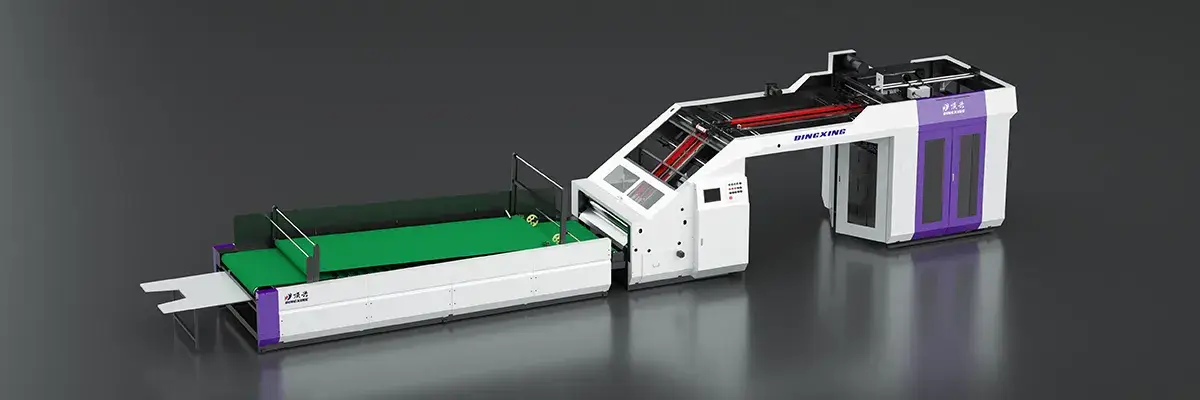
Sheet to sheet laminator is specialized equipment for binding laminated or foil-stamped colored boards with single or multiple (3/5/7) layers of corrugated cardboards using water-based adhesives into colored corrugated boards. The colored corrugated boards can later be cut and made into colored boxes. The sheet to sheet laminator is an essential component in a color-printed box or gift box production line.
| Model | ||
| Max. laminating size | 1450*1450mm | |
| Min. laminating size | 400*350mm | |
| Sheet thickness | top sheet | 120~600gsm |
| bottom sheet | 0.5-10mm | |
| Precision | ±1mm (affected by cutting precision) | |
| Max. speed | 170 m/min (affected by the qualities of paper) | |
| Power supply | 25kW | |
| Dimensions | 12744x2492x2630mm | |
| Total weight | 8100kg | |
-
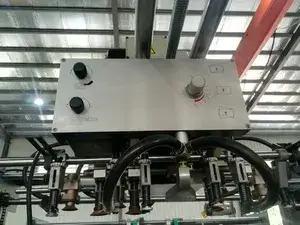 Servo-Controlled Shaftless Sheet Return Section
The servo-controlled sheet return unit does not require additional adjustments and can process sheets ranging from 120gsm to 600gsm. The sheet return unit is easy to operate and features specialized sheet-in and sheet-out designs, ensuring smooth operation for light-weight sheets.
-
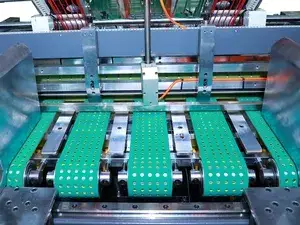 Bottom Sheet Conveyance Section
Two servo motors are equipped to ensure optimal timing for sheet conveying and intermittent suction, which helps large-size sheets’ feeding.
Heavy-duty air blaster and independent vibration-free belt support ensures smooth feeding for multiple-layered (2-5 layers) sheets. -
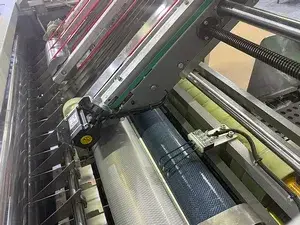 Gluing Section
High-precision stainless steel gluing roller assembly is the key for even gluing. The roller assembly ensures easy separation between sheet and roller and easy maintenance and adjustments.
Three sensors are installed to control glue output. The side bar prevents glue leak during high-speed operations and enables high-speed glue circulation. -
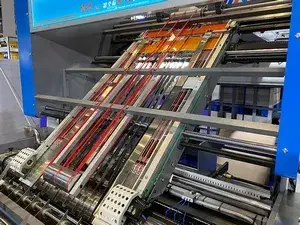 Registration Section
Multiple sensors are implemented to detect the feeding position of bottom sheets; two servo motors are installed on top to synchronously adjust top sheets, both ensuring precise alignment between sheets.